
The problem with expense trackers? They're a report card.
Report cards tell you how you did. They can't help you do better, because by the time you see one, the grades are already in.

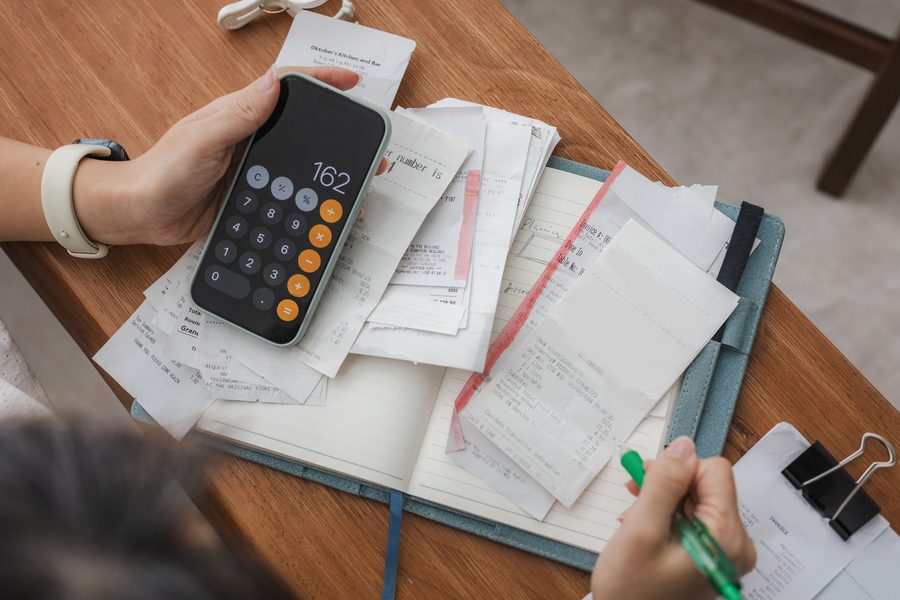
It's the 3rd of the month.
Your tracking app sends a friendly notification: $612 on dining out last month, 41% over target.
There's a chart. It's a good chart.
It's also completely useless, because that money is gone. All thirty-some of those decisions have already been made, and staring at the chart won't unmake a single one.
That's not the app failing. The app did exactly what it was built to do. It's a problem with what we ask expense trackers to do in the first place.
What expense tracking is great at
Let's be fair to the category, because tracking does something nothing else does.
It's the only way to find out what's actually true about your spending. Not what you assume. Not what you'd guess if a friend asked. What's black and white in front of you.
And the gap between the guess and the truth is usually enormous. People routinely lowball their own dining and subscription spending, then get a small shock the first time they see it categorized.
Tracking is also how you catch the slow leaks:
- The subscription you forgot about. $14 a month, eighteen months running.
- The service you're paying for twice. One through the app store, one through the website.
- The "cheap" convenience store habit. Turns out to be $180 a month.
None of that shows up in a balance check. It only shows up when transactions get categorized and totaled.
And tracking is how you find out whether anything you tried actually worked.
If you've ever tracked anything for any reason — calories, workouts, symptoms to report to a doctor — you already know the pattern. Tracking is diagnostics, and good diagnostics are worth a lot.
But a diagnosis isn't a treatment.
So what can't a tracker do?
Every expense tracker, no matter how well built, shares one constraint: the information arrives after the decision.
Picture yourself in the checkout line. The only question that matters is "can I afford this right now?"
To answer it from a tracking app, you'd have to open the app, remember which category this belongs to, find your month-to-date total, compare it against a limit you set three weeks ago, and do arithmetic. While a cashier waits.
Nobody does this. 🙃
Not because people lack discipline, but because the design asks for a lookup at the worst possible moment. So instead you glance at your balance, see a number that looks fine, and swipe.
The balance looks fine because it contains your rent money, your car insurance money, and the money for the dentist appointment in three weeks. It's the most misleading number in personal finance, and it's the one everybody actually uses.
Three things backward-looking data structurally can't do:
- It can't tell you what's safe to spend today. Your balance isn't that number, and your tracker won't compute it, because it doesn't know what's already spoken for.
- It can't step in. By the time a category turns red, the transaction has cleared.
- It can't survive a bad week. Tracking needs you to keep showing up. The month you're overwhelmed is the month you stop logging — and it's the month you needed it most.

What does forward-looking actually mean?
If a tracker is a report card, forward-looking money management is the syllabus. Same author either way. The difference is when you write it, and what it's for.
Forward-looking isn't a synonym for "automated" or "AI-powered." It's simpler than that:
You make the decision once, at a calm moment, and the decision sticks around without you.
That's the whole idea. Your judgment on a Sunday afternoon with a cup of coffee is dramatically better than your judgment on a Tuesday at 6pm when you're hungry, tired, and holding a menu. So you let Sunday-you decide, and you build something that carries that decision forward to Tuesday-you.
Cash envelopes were the original version of this, and they worked. You decided on payday how much went in the grocery envelope, and by Tuesday the decision was already made — the envelope either had money in it or it didn't. No lookup, no arithmetic, no willpower.
We stopped using envelopes because cash is inconvenient, not because the system was bad.
The modern version puts that structure back inside the account itself, so it works for card spending.

How this works in Crew
Pockets
Your balance is divided into pockets — Groceries, Gas, Bills, Vacation, whatever you need — and your debit card spends from a specific pocket. Swipe in the app before you tap your card to pick which one.
Autopilot
Autopilot is the layer that keeps those pockets funded so you don't have to.
You tell it what's coming — your bills, and what you want going into each pocket — and it sets that money aside as income arrives. Everything it's holding sits in your reserve, out of reach so it can't get spent by accident.
What that looks like with real numbers
Say you take home $2,200 on the 1st and the 15th. You tell Autopilot about the rent, the insurance, and the car payment, plus what you want going to Groceries and Vacation.
Now it's the 3rd. Your account balance says $2,900, which is the number that would have gotten you in trouble.
You've already spoken for $2,020 of it. Your Safe to Spend is the $880 that's left.
The second number is the true one. And you didn't have to work it out.
Two things the reserve does differently
Both of these go straight at the "what's safe to spend" problem.
It's one shared pool, not a stack of envelopes. Autopilot projects your income and payments forward, then works backward from the lowest point, holding exactly enough that the low point doesn't dip below zero. There's no per-bill amount, because your bills share one pool and money waiting on a bill that isn't due yet can cover one that is. That means less of your money sits locked up than if every bill got its own envelope.
Whatever's left is genuinely yours. Once bills and pocket contributions are covered, the remainder goes wherever you've pointed your surplus. No mental math, no wondering which part of the balance is already spoken for.
And because it's all one plan, things adjust themselves. Change a bill and the projection resettles on its own. Hit your vacation goal and Autopilot stops contributing to it, sending that money to surplus instead of piling it up where it isn't needed.
The practical difference shows up in the checkout line. You're not doing a lookup. The pocket has money in it or it doesn't, and finding out took zero seconds.
The honest part: you still need the backward-looking data
Here's what a lot of "automation replaces budgeting" content skips, and it matters.
You can't build a forward-looking system without backward-looking data.
The numbers you hand Autopilot have to come from somewhere. When you add a bill in Crew, it starts at whatever your most recent payment was — that's history doing the work. But for the variable stuff, you're the one who decides.
And if you guess groceries are $400 and they're really $610, you haven't automated your budget. You've automated a wish, and you'll spend three months wondering why the Groceries pocket keeps running dry.
So the order matters:
- Track first, for two or three months. Just observe what you spend. No limits, no judgment. Any tool works — a tracking app, a spreadsheet, your bank's own categorization. You're gathering evidence.
- Then set the structure with real numbers. Your actual grocery average, plus a little slack. A budget with no slack fails on the first unusual week.
- Then keep reviewing. Automation isn't set-and-forget forever, it's set-and-review-quarterly. Your life changes and your rules should follow.
Crew doesn't remove step one, and it doesn't remove step three. It removes the part in the middle where you had to manually carry out a decision you'd already made, every payday, forever.

Summary: tracker, structure, or both?
Expense tracking answers where did my money go?
Forward-looking management answers where is my money going?
You need both. The mistake isn't using a tracker — it's stopping there.
We think you should stick with a tracker for now if…
- You genuinely don't know what you spend on the variable stuff yet.
- You're hunting for leaks — forgotten subscriptions, duplicate services, categories you've never totaled.
- You want the report card before you write the syllabus. That's the right order.
We think you should add structure if…
- You already know roughly what you spend, and knowing hasn't changed anything.
- You check your balance before a purchase and it doesn't tell you what you actually wanted to know.
- You've stopped and restarted a budget more than once, and the thing that broke was the upkeep rather than the plan.
- You'd rather make the decision on a Sunday than in a checkout line.
Diagnostics tell you what's wrong. Structure is what fixes it.
If you want to see what your own numbers look like with your obligations already carved out, it's free to open an account, there's no minimum deposit, and it takes most people less than two minutes to sign up. And if you'd rather spend another month or two just watching your spending first, do that. You'll build better rules for it.
This article is general information, not personalized financial advice.
More articles
Meet Autopilot: a better way to budget
The magic of Crew's Autopilot is that money is set aside before you have to think about it. No more holding due dates and balances in your head.

Holidays on a budget: decide what the holidays will cost before Black Friday decides for you
Ever had a slightly tense conversation about money in January? A twenty-minute plan for picking a holiday number with your partner before the sales start.

Board games that teach kids about money better than a lecture
No kid ever changed their money habits from a lecture. Here are the board games — sorted by age — that teach real financial lessons, plus a few that cost nothing to play.