High-yield savings vs. high-yield checking: which one is doing which job?
One is where money sits. The other is where money moves. Most people need both — the useful question is which should hold what.


The financial world isn't confusing on purpose, but it might as well be. A million products at a million banks, all with names that sound like each other, and no obvious way to tell what is right for you. So you leave your money where it is and lose a few hundred dollars a year to inertia.
Two accounts come up more than any others: the high-yield savings account and the high-yield checking account. They sound like variations on the same thing. They aren't, and the difference is mostly about what job you need done.
(A quick note on where you're reading this: this is Crew's blog, and Crew makes one of the tools discussed below. We'll be specific about what it does.)
What is a high-yield savings account?
A high-yield savings account, usually shortened to HYSA, is a savings account that pays meaningfully more interest than a standard one. As of October 2026, the competitive range for nationally available HYSAs runs roughly 3.00% to 4.5% APY, with a few outliers, while the FDIC's national savings rate is 0.38%.*
How they work:
- Your money compounds. Interest typically posts daily or monthly, so you earn on your earnings.
- Deposits are federally insured. At an insured institution, up to $250,000 per depositor, per institution, per ownership category — FDIC at banks, NCUA at credit unions.
- Nothing is locked up. Unlike a CD, you can pull the money out whenever you want with no early withdrawal penalty.
- The rate isn't a promise. APY moves with the broader rate environment. The number you open the account with is not necessarily the number you'll have in a year.

What is a high-yield checking account?
A high-yield checking account is a checking account that pays interest. It often runs between 1% to 4.5% APY, with a handful of smaller banks and credit unions advertising even more under specific conditions, while the FDIC's national average checking rate is 0.07%.º
The catch is that the rate usually comes with conditions. Common ones include:
- Debit card quotas. Many accounts require a minimum number of debit purchases, often 10 to 15 per statement cycle.
- Direct deposit minimums. Some require a recurring deposit above a set amount. A few go further and require you to use the same bank for investing or loans.
- Balance caps. The headline APY frequently applies only up to $10,000 or $15,000. Anything above that drops to a much lower rate — often half a percent or less.
- Paperless enrollment. E-statements and online banking signup are standard.
Miss the requirements in a given month and you don't lose your money. You just drop to a much lower rate for that cycle.
A note on the eye-catching numbers: you'll find credit unions advertising 7% or even 10% on checking. Read the tier. Those rates typically apply only to the first few thousand dollars, require around 15 debit transactions a month plus a direct deposit, and pay close to nothing on the balance above the cap.

What they have in common
Before the differences, it's worth noting how much these two types of accounts actually share:
- Both pay far more than the traditional version of the same account.
- Both are federally insured at an FDIC or NCUA member institution.
- Both keep your money fully liquid — you can access it at any time.
- Both have variable rates that can change at any time.
- Both are most often found at online banks and credit unions, which have lower overhead than branch-heavy banks.
Where they actually differ
| High-yield savings | High-yield checking | |
|---|---|---|
| Built for | Storing cash and earning steady interest | Everyday spending and frequent transactions |
| Typical use | Emergency fund, short-term savings goals | Bills, groceries, gas, day-to-day purchases |
| Access | Online transfers and ACH; debit cards and checks are rare | Debit card, ATM access, check writing |
| To earn the rate | Usually just maintain a positive balance | Usually hit monthly activity requirements |
| Balance caps | Uncommon; the rate applies to your whole balance | Common; the top rate often stops at $10K–$15K |
| Transactions | Some banks still monitor frequent withdrawals | Unlimited deposits and withdrawals by design |
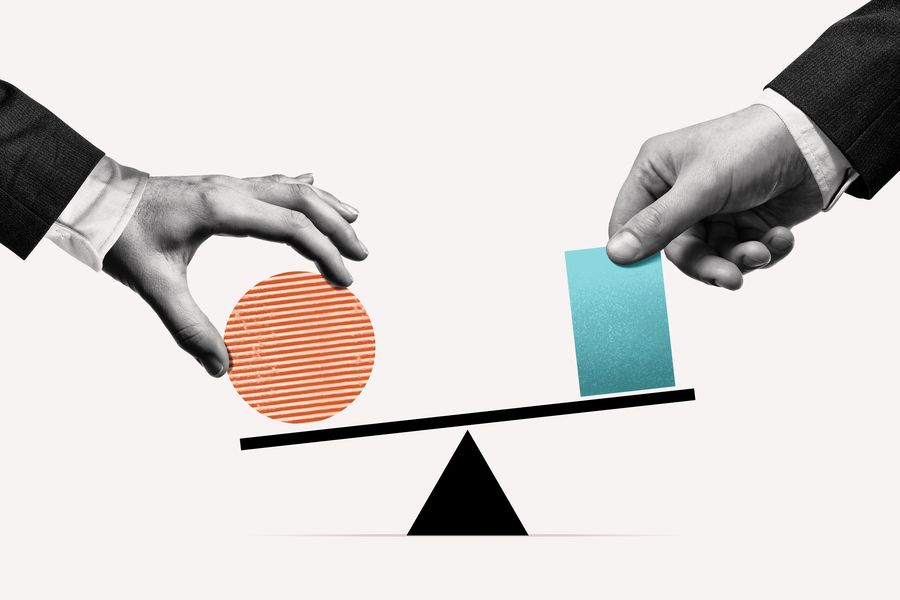
The short version: savings is where money sits, checking is where money moves. A HYSA rewards you for leaving your cash alone. High-yield checking rewards you for using the account actively.
How Crew fits in
Everything above describes the high-yield checking market as it generally works. Crew is built differently, and the differences are worth naming plainly so you can decide whether they matter to you.
| Some high-yield checking | Crew | |
|---|---|---|
| Monthly debit card activity requirements | 10–15 debit purchases, direct deposit minimums | None |
| Balance cap on the top rate | Often $10,000–$15,000 | None — your full balance earns |
| Rate | Headline rate up to the cap, then far less | 3.2% APY on everything3 |
| Money set aside inside the account | Rarely | Yes, with Pockets |
| Paper checks | Usually included | No checkbook — bill pay and external ACH instead |
| Minimum deposit | Varies | None |
No hoops. Two of the reasons people skip high-yield checking are the debit card quotas and the direct deposit minimums. Crew has neither. You earn the rate for having money in the account, the way a savings account works.
No balance cap. This is the bigger one. On most high-yield checking accounts, the headline rate stops at $10,000 or $15,000, which is why people end up running a checking account and a separate high-yield savings account — the overflow has to go somewhere it can still earn. With Crew there's no cap, so there's no overflow to manage. Your whole balance earns the same rate.
It can do the savings job too. Pockets let you set money aside inside your account — an emergency fund, a security deposit, a trip you're saving for. It's separated from your spending balance so you're not accidentally dipping into it, but it's still earning, and it's still yours to move in a couple of taps. For a lot of people, that removes the need for a second account entirely.
The tradeoff: no checkbook. Crew doesn't issue paper checks for you to write yourself. Bill pay and ACH transfers to accounts outside Crew cover most of what people used checks for — rent, utilities, paying someone back — so in practice this rarely comes up. And for the cases where a physical check is the only thing that works, a bill pay option that mails one on your behalf is on the way. Until then, if you have a landlord, a contractor, or a form that insists on a paper check, that's worth knowing before you switch rather than after.

So which one is right for you?
Most people don't have to choose. The two accounts are designed for different jobs, and the common setup is to use both: checking for the money you spend this month, savings for the money you're not touching.
That said, here's how to think about where your priority should be.
Lean toward high-yield savings if…
- You're building an emergency fund or saving for something specific.
- You want the money slightly out of reach so you don't spend it.
- You'd rather not track debit card counts or direct deposit minimums.
- Your balance is large enough that a checking account's cap would leave most of it earning nothing.
Lean toward high-yield checking if…
- You already use your debit card regularly, so the activity requirements are things you'd do anyway.
- You keep a real balance sitting in checking between paychecks and would like it to earn something.
- Your balance fits comfortably under the cap.
- You want one account that spends and earns, instead of moving money back and forth.
The honest test for high-yield checking is this: look at the requirements and ask whether you'd hit them without changing your behavior. If yes, the interest is basically free money. If hitting them would mean making purchases you wouldn't otherwise make, the account is working you rather than the other way around.
If you like the idea of high-yield checking but are unsure if you will check all the right boxes, you might want to try Crew. It's free to open an account, there's no minimum deposit, and most people finish signing up in under five minutes.
Rates, caps, and requirements cited in this article were accurate as of 10/21/2026 and change frequently — verify current terms with any provider before opening an account. This article is general information, not personalized financial advice.
* Rate range reflects nationally available high-yield savings accounts surveyed as
of October 21, 2026. (See https://www.nerdwallet.com/banking/best/high-yield-online-savings-accounts, https://fortune.com/article/best-savings-account-rates-8-27-2026/,
https://www.usnews.com/banking/high-yield-savings-accounts). APYs are variable and change frequently.
FDIC national rates for savings and interest checking, October 2026. (See https://www.fdic.gov/national-rates-and-rate-caps)
º High-yield checking APY range and outlier rates surveyed as of October 21, 2026.
(See https://www.usnews.com/banking/high-yield-checking-accounts, https://www.bankrate.com/banking/checking/best-high-yield-checking-accounts,
https://www.cnbc.com/select/best-high-interest-checking-accounts/, https://www.monitorbankrates.com/high-yield-checking-accounts.)
Advertised rates may carry monthly transaction requirements, direct deposit minimums, and balance tiers; some are
restricted by age or membership eligibility.
FDIC national rate for interest checking, October 2026. (See https://www.fdic.gov/national-rates-and-rate-caps)
More articles

The Problem with Expense Trackers? They're a Report Card.
Report cards tell you how you did. They can't help you do better. Here's what expense tracking is great at, what it can't do, and how forward-looking money management fills the gap.

Meet Autopilot: a better way to budget
The magic of Crew's Autopilot is that money is set aside before you have to think about it. No more holding due dates and balances in your head.

Holidays on a budget: decide what the holidays will cost before Black Friday decides for you
Ever had a slightly tense conversation about money in January? A twenty-minute plan for picking a holiday number with your partner before the sales start.